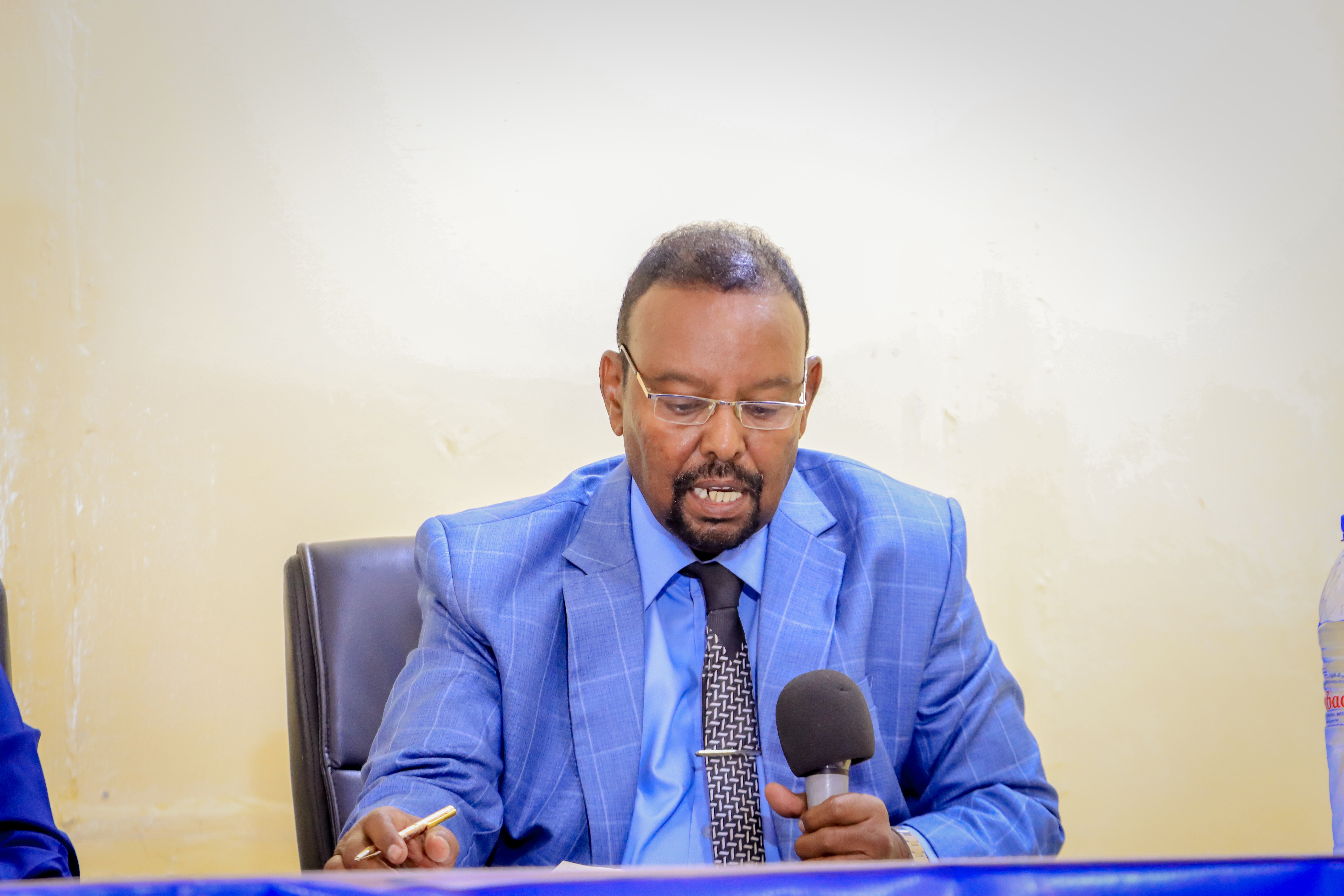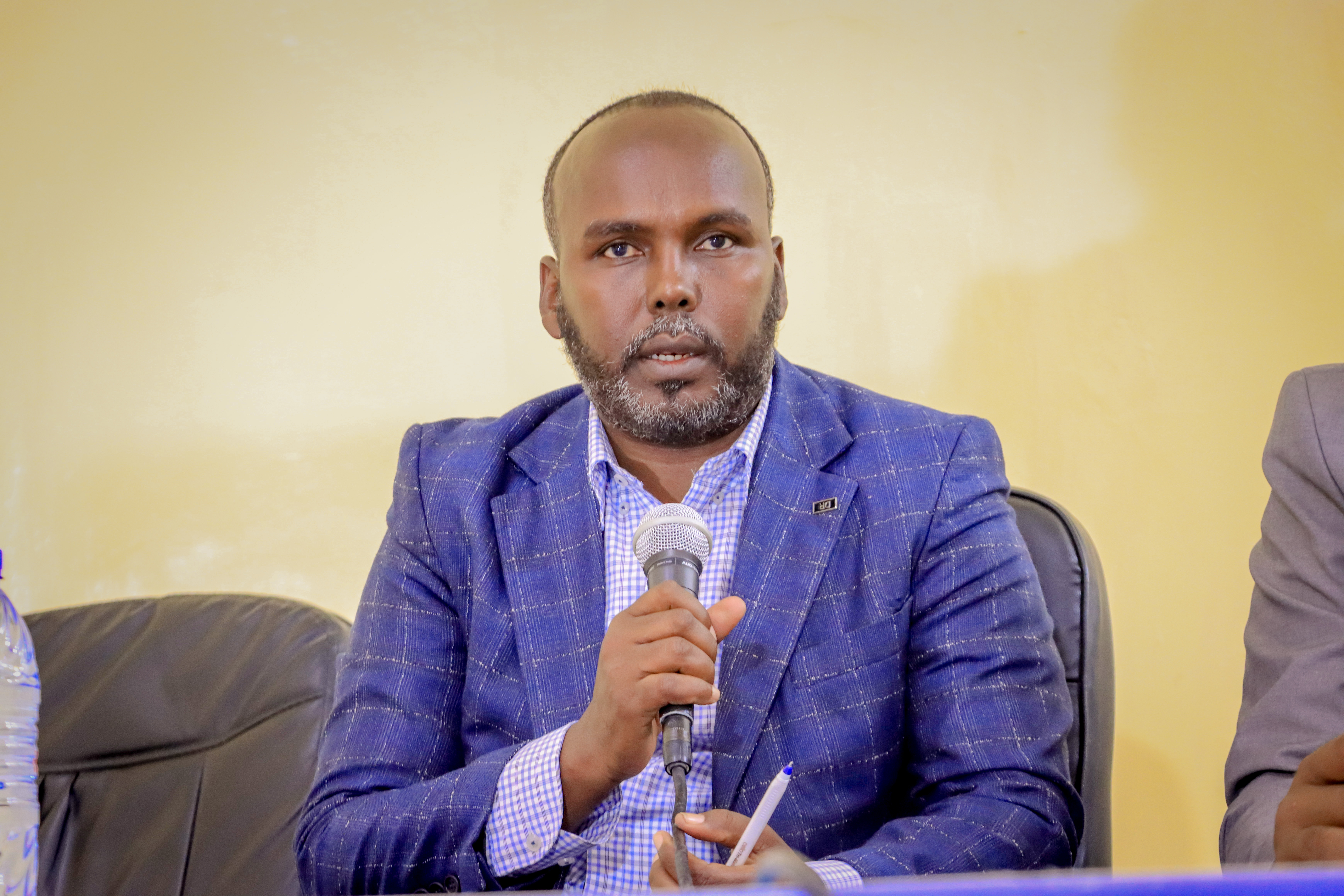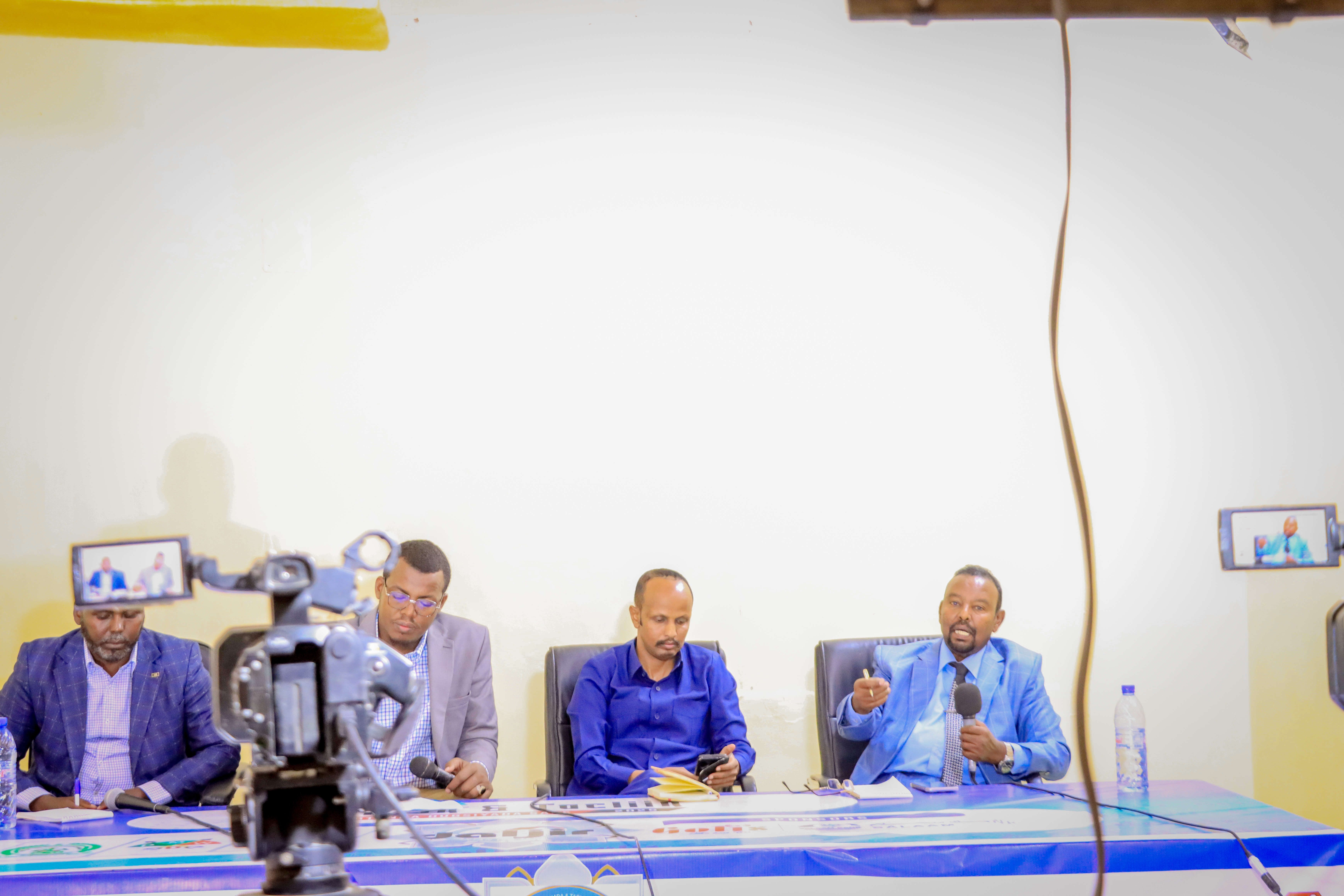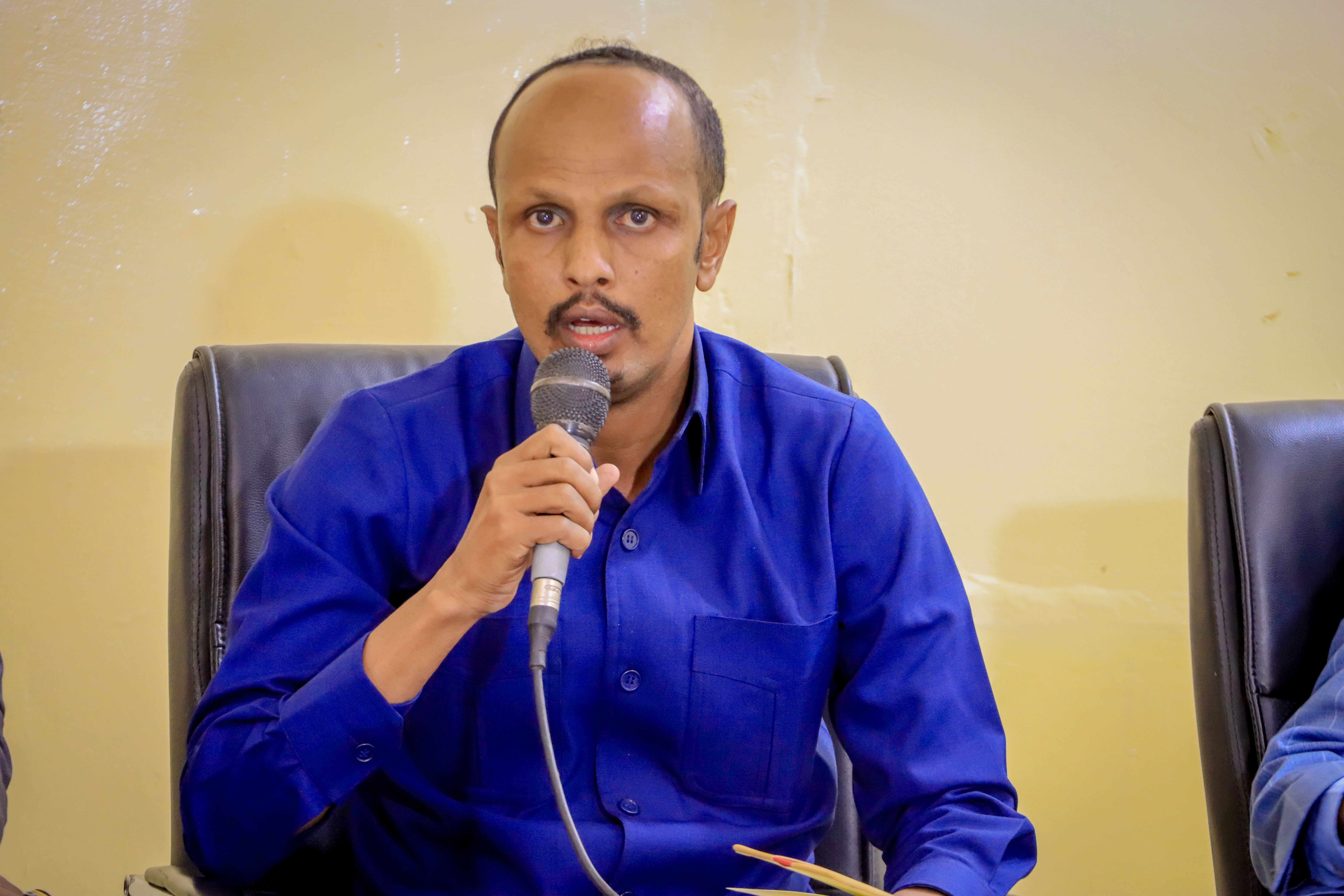
Garowe, Puntland, December 2025; The Media Association of Puntland (MAP), in collaboration Free Press Unlimited (FPU), hosted a live-streamed radio and online Talkshow on 3 December 2025, engaging communities across Puntland in an in-depth discussion on climate change and its growing impact on disaster risks.
Broadcast on Daljir Media and its social media platforms, the program enabled wide public participation through phone-ins and Facebook discussions, with callers joining from across Puntland’s regions as well as from the diaspora online.
The event brought together Hon. Yasin Jama Omar (Taakilo), Chair of the Parliamentary Committee on Environment and Natural Resources; Dr. Cali-Nuur Husein Ducaale, an agricultural scientist; and Mr. Dahir Farah, Director of the Puntland Civil Society Network also known as PUNSAA.
The Talkshow underscored the deep connections between climate change, environmental degradation, and disaster risk management in Puntland. Panelists emphasized that recurring droughts, flash floods, deforestation, and unregulated pastoralism are not isolated challenges—they form a linked chain of pressures that weaken community resilience, reduce agricultural productivity, degrade rangelands, and ultimately threaten livelihoods and social stability.
Hon. Yaasin explained that Puntland has established strong environmental laws intended to curb destructive activities such as charcoal production and uncontrolled tree-cutting. However, enforcement remains weak, allowing harmful practices to persist. He noted that the lack of affordable alternative energy sources pushes communities toward unsustainable behaviors despite existing regulations. “Our laws are strong, but without proper enforcement and sustainable alternatives, our environment—and our communities—remain at risk,” he said, stressing the need for better implementation mechanisms and improved access to cleaner energy options.
His contribution made clear that policy strength alone is insufficient when institutions lack the capacity to enforce regulations and when communities lack viable, legal alternatives.
Mr. Dahir Farah focused on the ecological and socio-economic strain placed on Puntland’s rangelands by unregulated pastoralism. He explained that overgrazing diminishes rangeland recovery during droughts, accelerates land degradation, and increases the risk of displacement and livelihood loss. This environmental stress also fuels competition over resources, compounding community vulnerability. To address these challenges, he advocated for agro-pastoral approaches, expanded fodder production, and practical grazing regulations, supported by community awareness and government action. “Sustainable grazing is not just about livestock—it is about safeguarding our people’s future and the land they depend on,” he emphasized.
Dr. Ali-Nuur Husein Ducaale discussed how climate change is reshaping Puntland’s agricultural landscape. He explained that rising temperatures, shifting rainfall patterns, and more frequent droughts are degrading soil fertility, reducing crop yields, and threatening food security across the region. He stressed that these impacts are both environmental and socio-economic, as diminishing agricultural productivity undermines household incomes and community stability. To mitigate these risks, he called for climate-smart agriculture, improved irrigation systems, and greater investment from government and financial institutions to support farmers’ adaptation efforts. “If we do not change the way we farm and manage our land, our future disasters will be far worse than what we face today,” he warned, urging urgent transitions to sustainable agricultural practices.
Together, the discussions showed that environmental policy, rangeland management, and agricultural resilience are deeply interconnected. Effective disaster risk management in Puntland requires moving from reactive responses to preventive, coordinated solutions that link strong policy enforcement, sustainable land use, and climate-adaptive agriculture to build long-term community resilience.
Watch the full event clip here:MAP full event on the Climate talkshow
END